
Pharmacogenomics Course
Early Bird Discount Note: Save 15% if you enrol before the 9th of October.
Course From: 9th November 2026 – 11th February 2027
8 hours of lectures/modules · General & Ethical CEU’s will be awarded · Optional Q & A weekly calls
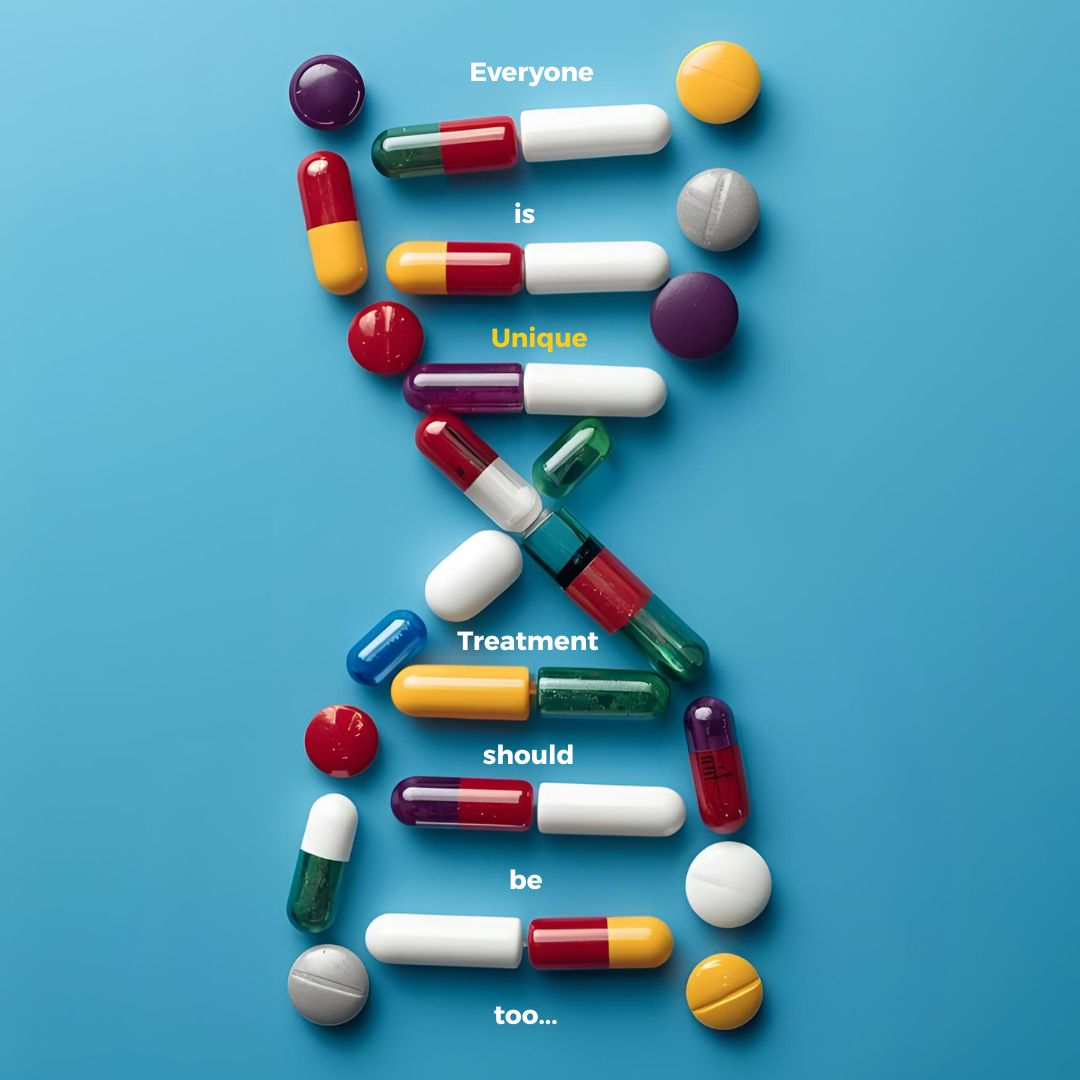
This CME-accredited course gives clinicians a practical grounding in pharmacogenomics, the study of how a person’s genetic make-up affects the way they respond to medications. The focus throughout this module is on real prescribing decisions: understanding why two patients on the same drug at the same dose can have very different outcomes, and how genetic information can help make treatment safer and more effective.
COURSE OVERVIEW
Why two patients get different outcomes.
01
THE FUNDAMENTALS
How the body handles a medication, and where genetics steps in.
The course opens with the fundamentals. It looks at how the body handles medications, from absorption through to breakdown and clearance, and where genetic differences come into that picture. This sets up the central idea of the course, that a patient's genes can influence whether a drug works, whether it causes harm, or when it needs dosage adjustment to work optimally.
02
DRUG METABOLISM
Fast, slow, or somewhere in between.
From there it moves into drug metabolism, which is the heart of everyday pharmacogenomics. The course explains the enzymes responsible for breaking down a large share of commonly used drugs, and how genetic differences sort patients into different metaboliser types. Some patients clear a drug too quickly and get little benefit, while others clear it too slowly and are at risk of toxicity. A key point here is the difference between an active drug and a prodrug, since the same genetic result can mean opposite things depending on which one you are prescribing. Familiar examples like codeine, clopidogrel and warfarin are used to show how this plays out in practice.
03
ACROSS PRACTICE AREAS
From pain management to oncology.
The course then works through where pharmacogenomics matters most across different areas of practice. In pain management, it looks at why some patients get no relief from standard doses while others are at risk of dangerous side effects. In cardiology, it covers how genetics affects the response to common blood thinners and the implications for patients after procedures. In psychiatry, it addresses why finding the right antidepressant or antipsychotic can be such a trial-and-error process, and how genetic information can shorten that path. In oncology, it explains how testing the patient and the tumour helps match people to the treatments most likely to work for them.
04
TESTING IN PRACTICE
What a result can tell you, and what it can’t.
Attention then turns to the practical side of testing. The course looks at what pharmacogenomic tests actually measure, how to read and make sense of a report, and, just as importantly, what these tests cannot tell you. It stresses that genetic results are one piece of the clinical picture rather than a definitive answer, and that they sit alongside everything else a clinician already weighs up when prescribing.
05
DAY TO DAY
When it’s worth testing, and how to talk it through.
The course also covers the day-to-day realities of bringing pharmacogenomics into practice, including when testing is worth ordering, how to talk through results with patients, and the ethical questions that come with genetic information. It closes with a review of the main concepts, a chance to work through common questions, and a final assessment for CME credit.
Be the first to review “Pharmacogenomics Course”
Related products

Microbiome Course
Original price was: R4 000.R3 400Current price is: R3 400.
Nutrigenomics Course
Original price was: R4 000.R3 400Current price is: R3 400.
Genetics in clinical practice Course
Original price was: R6 500.R5 525Current price is: R5 525.
Reviews
There are no reviews yet.